Here Are 7 Key Quotes from the U.S. Supreme Court in Mirabelli v. Bonta
Here are the most important quotes from the Court's opinion in this historic victory for parental rights.
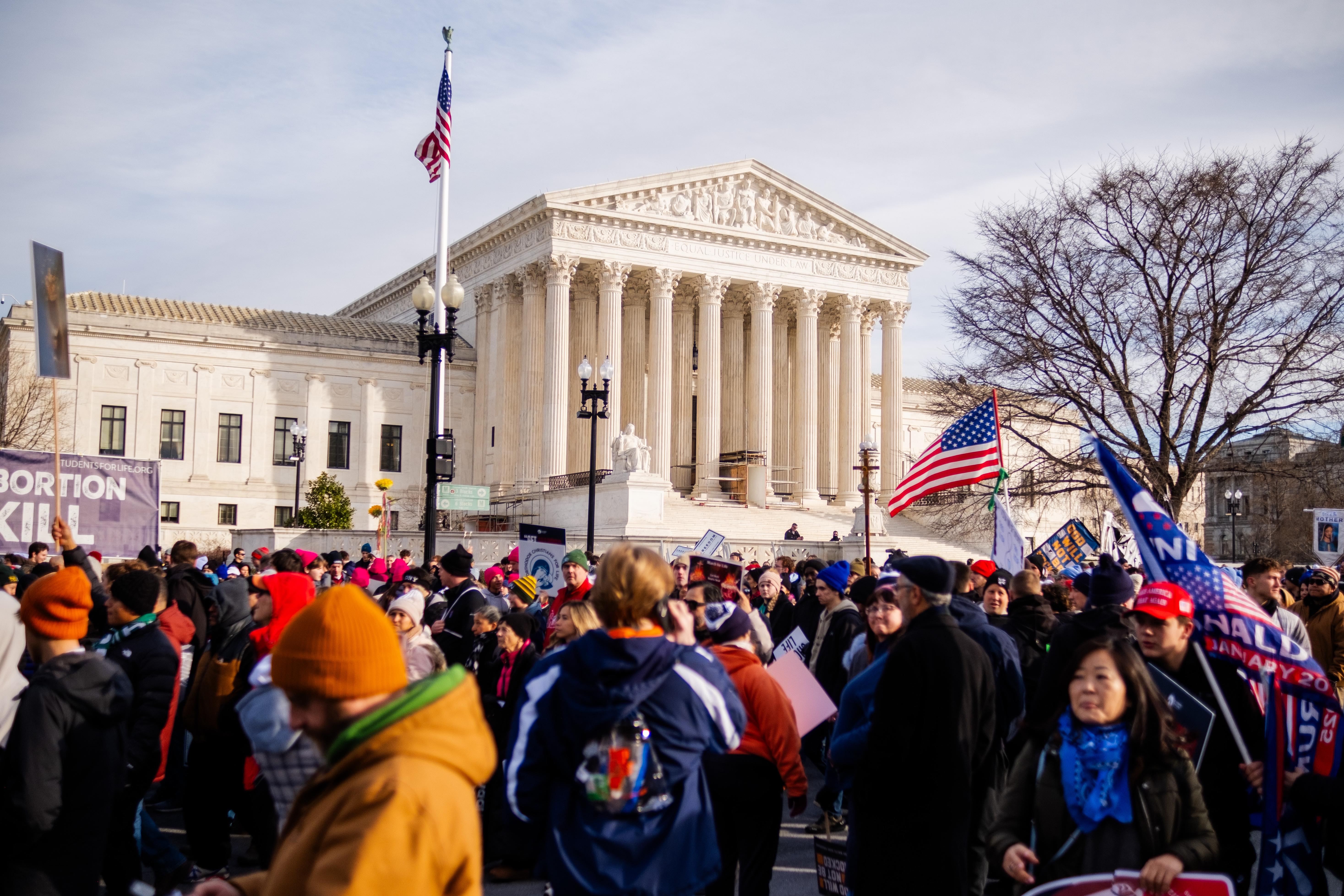
On March 2, 2026, the United States Supreme Court handed down a groundbreaking ruling in Mirabelli v. Bonta, vacating the Ninth Circuit's stay of a district court injunction and holding that California's secret gender transition policies in schools likely violate parents' constitutional rights. The 6-3 decision is the most significant parental rights ruling in a generation, vindicating the rights of mothers and fathers to know what is happening with their own children.
The per curiam opinion, along with a concurrence from Justice Barrett, with the Chief Justice and Justice Kavanaugh, did not mince words. Here are seven key quotes from this landmark decision and what they mean for families across America.
1. "California’s policies conceal that information from parents and facilitate a degree of gender transitioning during school hours. These policies likely violate parent’s rights to direct the upbringing and education of their children.” — Per Curiam, p. 6
Right out of the gate, the Court laid bare exactly what California has been doing through Parental Exclusion Policies—hiding critical information about children's mental health from the very people most responsible for their wellbeing. The Court recognized that gender dysphoria has serious implications for a child's mental health, and that the state was actively keeping parents in the dark while facilitating transitions during school hours. The Court reinforced our argument that this case isn’t about abstract ideologies but rather real children and real families who have suffered lasting harm from Parental Exclusion Policies.
2. "[These] policies cut out the primary protectors of children's best interests: their parents." — Per Curiam, p. 5
In one sentence, the Court rejected California's paternalistic premise that the state knows better than Mom and Dad. The Court affirmed what every parent already knows, namely, it is parents—not bureaucrats or school administrators—who are the primary protectors of their children. California's policy framework treated parents as threats to be managed rather than partners.
3. "The intrusion on parents' free exercise rights here—unconsented facilitation of a child's gender transition—is greater than the introduction of LGBTQ storybooks we considered sufficient to trigger strict scrutiny in Mahmoud." — Per Curiam, p. 5
This point is enormously significant from a legal standpoint. Last term, in Mahmoud v. Taylor (2025), the Court held that when a school district introduced LGBTQ+ storybooks into its elementary curriculum and then denied parents the ability to opt their children out of that instruction, strict scrutiny applied under the Free Exercise Clause—regardless of whether the policy was neutral and generally applicable. The Court effectively put states on notice—if storybooks can trigger strict scrutiny, secretly transitioning a child certainly does!
4. "Parents—not the State—have primary authority with respect to 'the upbringing and education of children.'" — Per Curiam, p. 5
Drawing on a century of established precedent stretching back to Pierce v. Society of Sisters (1925) and Meyer v. Nebraska (1923), the Court reaffirmed the bedrock constitutional principle that the right to raise one's children belongs to parents, not the government. This forceful restatement of substantive due process protections for parental rights is a landmark moment, especially significant given recent debates about the scope of that doctrine.
5. "The right protected by these precedents includes the right not to be shut out of participation in decisions regarding their children's mental health." — Per Curiam, pp. 5–6
Here, the Court extended the logic of its longstanding parental rights jurisprudence to the specific context of children's mental health decisions at school. The message to states here is clear; they must not build a wall between parents and their children when it comes to something as salient as theirmental health. Parents have a constitutional right to be involved, and no state policy can strip away that right.
6. "The injunction here promotes child safety by guaranteeing fit parents a role in some of the most consequential decisions in their children's lives." — Per Curiam, p. 6
California had argued that its secrecy policies were necessary to protect children's safety. The Court turned this argument soundly on its head. Far from threatening child safety, the Court explained, parental involvement promotes it. Keeping parents informed and engaged in the most important decisions affecting their children is a crucial safeguard, not a danger. The Court was careful to note that existing child-abuse laws remain fully available to protect children in cases where parents are genuinely unfit to direct the education and upbringing of their children.
7. "I have no doubt that parents have rights, even though unenumerated, concerning their children and the life choices they make." — Justice Kagan, dissenting, p. 6
Perhaps the most telling quote in the entire ruling comes not from the majority, but from the lead dissenter. Justice Kagan, writing for herself and Justice Jackson, could not openly disagree with the fundamental principle lying at heart of this ruling. However, even while criticizing the Court's procedural approach, she openly conceded that parents possess constitutional rights over their children's upbringing. When even the dissent agrees that the core right at issue is real, you know the Court's ruling stands on firm footing. This concession drives home just how decisive and far-reaching this victory for parental rights truly is.
The Supreme Court's ruling in Mirabelli v. Bonta is a watershed moment not just for California, but for states across the country. It establishes that secret gender transition policies in schools violate both the Free Exercise Clause and the Due Process Clause, while also ensuring that parents cannot be shut out of their children's lives by government decree. As the case continues through the appellate process, the district court's injunction protecting parental rights remains firmly in place, prioritizing the sacrosanct relationship between parents and their children over ideology-driven politics.
To read the full opinion of the Supreme Court in Mirabelli v. Bonta, click here.