Conscience Under Siege
After a decade in court, Illinois is still trying to twist a pro-life conscience law from a shield into a sword

This article originally appeared in the Thomas More Society 2025 Impact Report. To explore the full Impact Report, click here.
“I didn’t know, I didn’t know,” sobbed a mother, rocking back and forth under the weight of twenty years of regret.
She had come in with her pregnant 18-year-old daughter. They had already decided on an abortion—they just wanted an ultrasound to know how far along she was. But when the flickering image appeared on the screen, everything changed. The small figure was nine weeks old—the same age as the child the mother had aborted two decades earlier. Back then, she had been told it was just a clump of tissue. Now, she was looking at her grandchild.
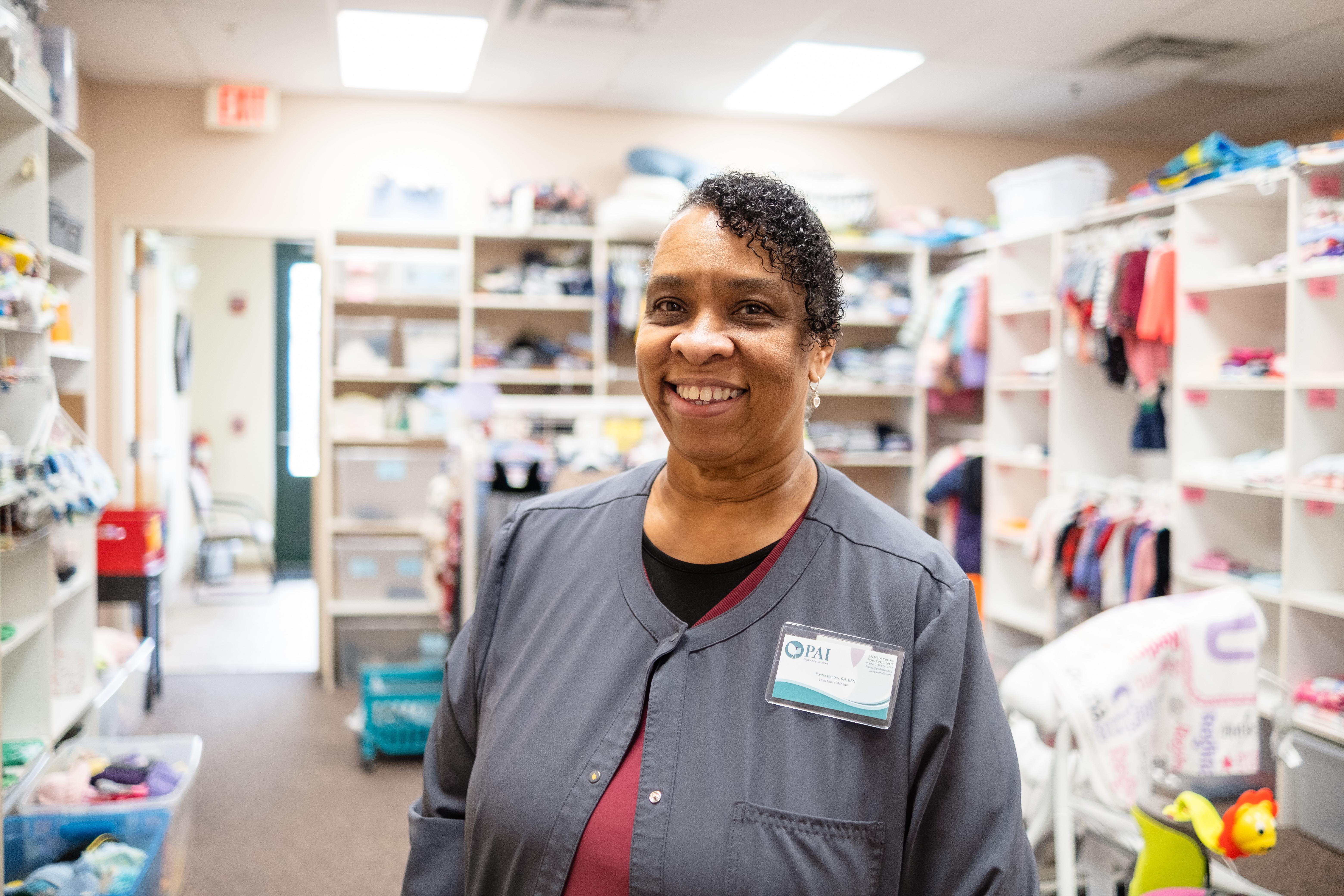
Pasha Bohlen, a nurse manager at Pregnancy Aid Illinois who has spent 20 years counseling women at her pregnancy centers in the south Chicago suburbs, paused the scan to console her and share the resources her center offers to post-abortive parents. “The mother, at the end of that visit, went up to her daughter and told her that she would help her, that they were going to keep the baby,” Pasha later testified in federal court.
That moment captures exactly what is at stake in the nearly decade-long fight over Illinois Senate Bill 1564, and why pregnancy centers like Pasha’s refuse to bend.
In 2016, Illinois amended its Health Care Right of Conscience Act—a law originally designed to shield healthcare professionals who, guided by their convictions, declined to participate in practices they find morally objectionable, including abortion. SB 1564 gutted those protections. Under the amended law, pro-life doctors and pregnancy centers could only keep their conscience shield if they agreed to two conditions: discuss the so-called “benefits” of abortion with their patients, and refer patients to abortion providers upon request. For pro-life doctors, like Dr. Ronald Schroeder, this threatened to undermine the entire purpose of his medical practice. For ministries whose entire mission is built on offering life-affirming alternatives, the law was a binding ultimatum—promote what you exist to oppose, or lose your legal protections.
“As far as speaking to the ‘advantages of abortion,’ that’s the craziest thing you could imagine,” says Judy Cocks, Executive Director of 1st Way Life Center in Johnsburg, Illinois, who has led her pregnancy center for over two decades. “Even when we went to court, the other side was hard-pressed to come up with a list of advantages or ‘benefits’ to abortion. There aren’t any.”
Thomas More Society filed suit in 2017, representing a coalition of Illinois pregnancy centers and Dr. Schroeder. A preliminary injunction blocked enforcement of both mandates while the case wound through the courts for nearly eight years.
The breakthrough came after a three-day bench trial in September 2023, where Pasha, Judy, and Dr. Schroeder testified. In April 2025, Judge Iain D. Johnston struck down the Abortion Promotion Mandate as unconstitutional, writing that “the State can’t require medical professionals to discuss with patients what the State believes are the benefits of abortions.” He noted a glaring hole in the state’s defense: despite claims that women’s health was “in grave peril” without the mandate, Illinois had presented no evidence to support that assertion.
The victory, however, was incomplete. Judge Johnston upheld the law’s Abortion Referral Mandate—even while acknowledging that pro-life physicians and pregnancy centers “are required to effectively endorse a course of conduct they find morally abhorrent.” Thomas More Society immediately appealed to the U.S. Court of Appeals for the Seventh Circuit.
Then came a powerful second front. In January 2026, the U.S. Department of Health and Human Services issued a formal Notice of Violation, finding that SB 1564 violates the Coats-Snowe and Weldon Amendments—federal statutes that prohibit government entities receiving federal funds from coercing healthcare professionals into referring for abortion. The Notice came in response to a 2018 complaint TMS attorneys filed with the Department’s Office for Civil Rights. What a federal court declined to strike down on constitutional grounds, HHS declared unlawful under federal statute.
“The referral is like our tacit approval that abortion is okay,” Judy explains. “We cannot, in good conscience, refer for abortion. That’s not who we are, and it hurts our hearts to even contemplate being mandated to do so.”
.jpg)
For Pasha, Judy, and the pregnancy help centers that have held the line since 2016—continuing to serve women and children faithfully while this legal storm raged around them—the fight is not yet over. The HHS finding is a powerful validation, but administrative rulings can shift with political winds. That is why the appeal before the Seventh Circuit matters: a constitutional victory would establish a permanent shield for conscience rights that no one can take away.